Most of the kratom in the global supply chain passes through the hands of farmers whose families have been working with the plant for generations — well before there was an export market, well before the Western consumer existed. This is a small profile of one of the partner farms behind our Thai catalogue, in the southern Thai province of Surat Thani.
The point isn’t to romanticise. The realities of agricultural work in Southeast Asia are hard, and the global kratom market has changed those realities in ways that aren’t uniformly good. The point is to make visible the supply chain that produces a product most consumers buy without ever thinking about who picks it.
Surat Thani
Surat Thani is on Thailand’s southern peninsula, between the Gulf of Thailand and the Andaman Sea. The province is known for rubber, palm oil, and rambutan — and, in pockets, for kratom. The trees grow well in the lowland tropical climate; established groves can produce harvestable leaves multiple times a year.
Kratom has been part of agricultural and working life in this region for as long as anyone can remember. Older farmers describe their grandparents chewing fresh leaves during the working day — the way coffee or betel nut were used in adjacent traditions. The plant was simply present, the way certain trees are present in any place where they grow easily.
The farm
Our primary partner farm has been in the same family for three generations. The current head of the operation took over from his father in the early 2000s. The trees range from young plantings to mature specimens that pre-date the family’s formal cultivation — some of the larger ones may be a century old.
Harvest happens in cycles tied to the trees’ maturation rhythm rather than the calendar. Workers (mostly local, often family members or long-time employees) pick selected leaves by hand, sort them by maturity, and bring them in for processing. The leaves destined for green-vein product are picked at one stage; red vein at another. The selection happens at the tree, not at the mill.
What happens after the harvest
Once picked, leaves are washed and brought into shaded indoor drying rooms. Drying in shade rather than direct sun preserves the active compounds in the leaf — it’s slower and more labour-intensive, but the difference shows up in the finished product. The farm has chosen the longer process consistently across generations.
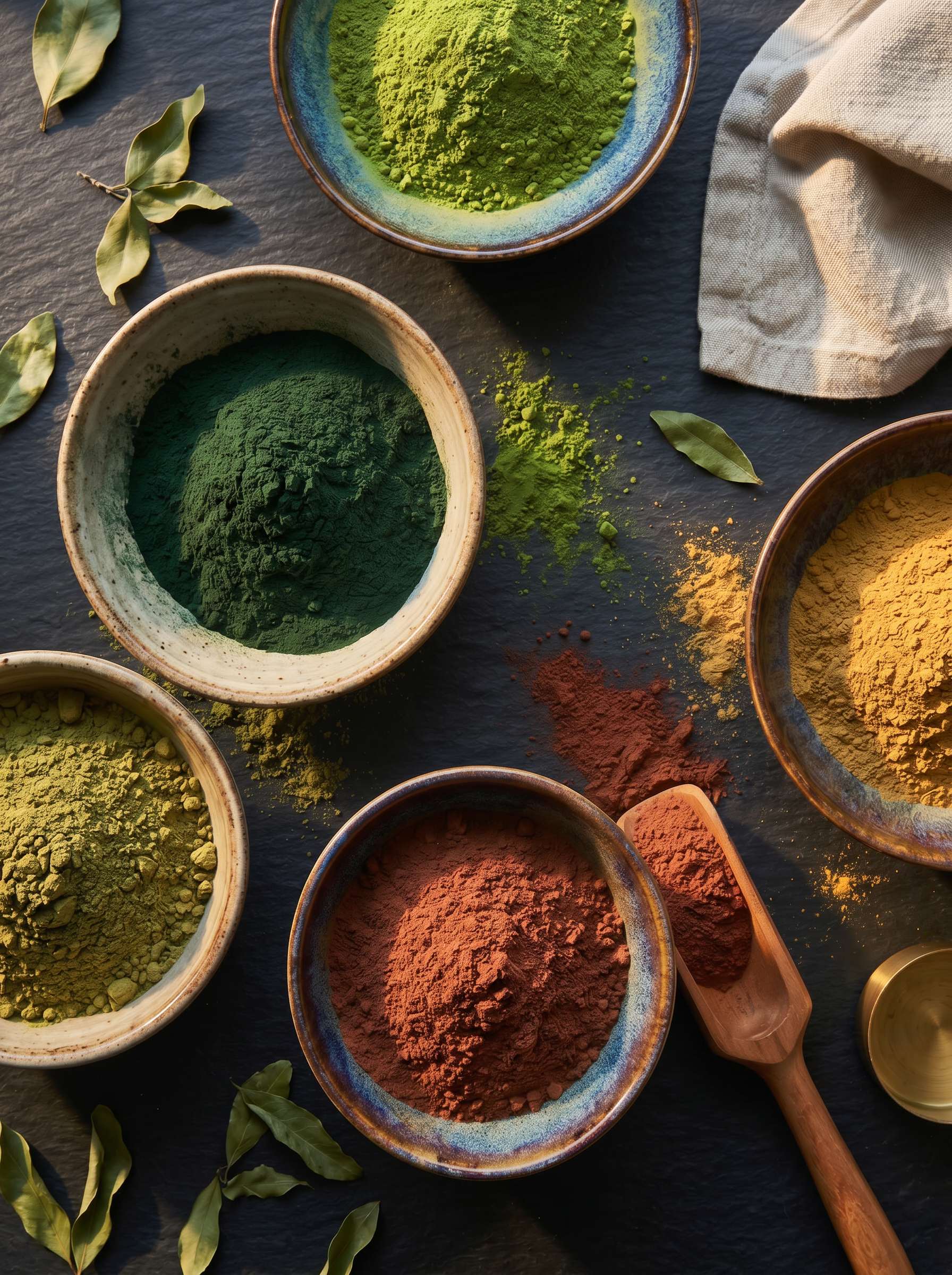
After drying, leaves are visually inspected and sorted. Stems and damaged material are removed. The remaining leaf is milled to a consistent fine powder. Each batch is sampled, sealed, and labelled with batch identifiers that travel with the product through the export and distribution chain.
By the time a finished bag of Green Maeng Da reaches a consumer in the United States, it has passed through this farm, a milling station, a quality-check process, an exporter, an importer, customs, a US-based testing lab, and a distribution centre. The hands at the front of that chain are the ones with the most knowledge of what makes the leaf good — and the least visibility to the people who eventually buy it.
What changed when the West became a market
For most of the farm’s history, kratom was a local product with local demand. Domestic Thai markets were the destination. The dynamics shifted in the 2010s as US import demand grew sharply and prices for export-quality leaf rose with it.
The effects on local farms have been mixed:
- Better income for established growers who could meet quality and consistency standards required for export. A multi-generational operation with the infrastructure to produce reliably has done well in the new market.
- Growing pains of rapid scaling. The Western market came online quickly, and global kratom supply had to expand fast to meet it. Experienced partner farms like the ones we work with were well-positioned to scale carefully; the broader supply chain took time to mature alongside the demand.
- Complicated regulatory history. Kratom was technically illegal in Thailand for most of the export era, despite being culturally embedded for centuries. The legal status was only reversed in 2021, allowing legal cultivation and trade. The decade preceding that change was one in which the work happened in a legal grey zone, with all the complexity that implies.
Why this matters for consumers
The visible part of buying kratom is the bag, the label, and the price. The invisible part is everything that comes before. A few practical implications of where the leaf actually comes from:
- Continuous supplier relationships matter for consistency. Operations that buy from the same farms over years can ask for specific harvest practices and learn what each farm reliably produces. Spot-market buyers cannot.
- Premium leaf has real underlying costs — growing, harvesting, drying, and shipping carefully isn’t cheap, and the pricing of premium products reflects what it actually takes to produce them.
- The work is real labour by real people. The farm we buy from supports a small community of workers and their families. The export market, when it functions well, makes that work viable.