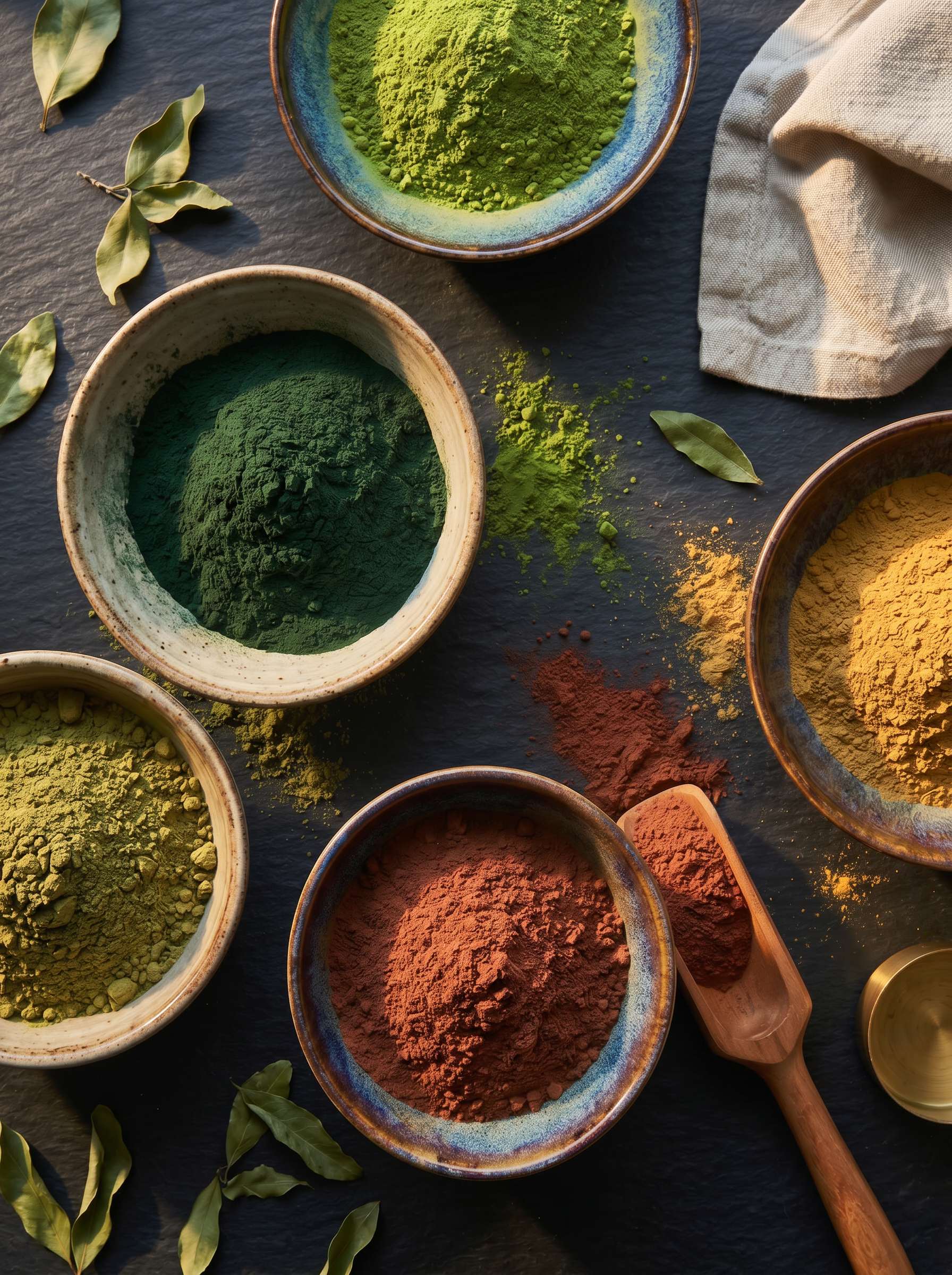
Kratom (Mitragyna speciosa) is a tropical evergreen tree native to Southeast Asia — particularly Thailand, Indonesia, Malaysia, and Papua New Guinea. People have used the leaves traditionally for hundreds of years. In the West, kratom became widely available only in the past two decades, and most Americans encountered it for the first time within the last ten.
If you're reading this, you probably want a clear, honest description of what kratom is and isn't, before you decide whether it belongs in your routine. That's what this article is for.
Where it comes from
Kratom belongs to the Rubiaceae family — the same botanical family as coffee. The trees grow in tropical lowland forests and can reach 25 metres in maturity. The product you see for sale comes from the leaves, which are picked, washed, dried, and processed into one of several formats.
Traditionally, fresh leaves were chewed by labourers in southern Thailand and northern Malaysia, or brewed into a mild bitter tea. The practice was woven into the working day in the way coffee is in many Western countries — a familiar mid-shift habit. Modern Western consumers receive the leaf in dried, ground form because shipping fresh leaves over thousands of kilometres isn't practical.
The alkaloids — in plain language
Kratom leaves contain a group of plant compounds called alkaloids. Researchers have identified more than 40, but two are present in meaningful amounts and account for most of what people experience: mitragynine and 7-hydroxymitragynine. Mitragynine is the dominant one — it makes up the bulk of total alkaloid content in raw leaf. 7-hydroxymitragynine is present in much smaller amounts but is more potent gram for gram.
Both alkaloids produce a noticeably different experience depending on the amount taken. At lower doses, the character is mildly stimulating — coffee-adjacent, which is fitting for a plant in the same botanical family. At higher doses, the experience shifts toward calmer and fuller-bodied. That dose-response shape — stimulating one way, sedating the other — is one of the reasons kratom does not slot neatly into any existing drug category.
Kratom produces stimulant-like effects at lower doses and more sedating and pain-relieving effects at higher doses — a profile that doesn't map neatly onto any single conventional drug class, and part of why its pharmacology has remained a subject of active research rather than a settled question.
— Paraphrased from Prozialeck et al., Journal of the American Osteopathic Association, 2012
An important note about kratom.com's product line: we sell whole-leaf kratom and plant-derived full-spectrum extracts. Concentrated single-alkaloid 7-OH products are a separate category with a different pharmacology and a different regulatory conversation around them. The distinction matters when you're reading any kratom-adjacent product label.
Vein colours and strains
Walk into a kratom shop and you'll see products labelled "Red Vein", "Green Vein", "White Vein", and occasionally "Yellow" or "Gold". The vein colour refers to the colour of the central rib running through the leaf at the time of harvest:
- Red vein — leaves harvested at full maturity. Often described as more sedating, fuller-bodied.
- Green vein — mid-harvest leaves. Generally described as balanced, neither markedly stimulating nor sedating.
- White vein — younger leaves. Often described as more stimulating, brighter.
- Yellow / Gold — usually a result of specific drying or processing, not a separate biological vein colour.
The name attached to a strain — Maeng Da, Borneo, Bali, Malay, Indo, Thai — refers to the geographic origin or, in the case of "Maeng Da", a quality designation that originally meant a high-grade selected lot. These names aren't strictly standardised across the industry. Two vendors selling "Red Bali" may have leaf with somewhat different profiles.
The formats you'll see
Once dried, kratom leaf is sold in several forms. The differences matter mostly for convenience and dose precision:
- Powder — finely ground dried leaf. The most common, most versatile, lowest cost per gram. Mixed into water, juice, or brewed as tea.
- Capsules — powder pre-measured into vegetable capsules (typically 500 mg each). More expensive per gram than loose powder; the trade-off is convenience and easier serving control.
- Tea cut — coarser leaf cut for brewing as a loose-leaf tea, where you steep and strain.
- Extracts — concentrated preparations of leaf alkaloids. Significantly stronger per gram. Serving sizes are much smaller. Worth approaching carefully if you're new to kratom.
How to recognise quality
Premium kratom is identifiable by a few clear markers. What to look for:
- Published Certificates of Analysis (CoAs) for each batch — covering heavy metals, microbial contaminants like Salmonella and E. coli, and alkaloid content.
- Membership in the American Kratom Association (AKA) GMP qualification programme.
- Clear sourcing — does the vendor say where the leaf comes from, and from whom?
- Consistent product naming and batch numbers, so you can track what you bought and what you're buying again.
This is part of why kratom.com exists in the format that it does — the educational content here, the lab control, the openness around sourcing. Setting the standard means being building trust through transparency.