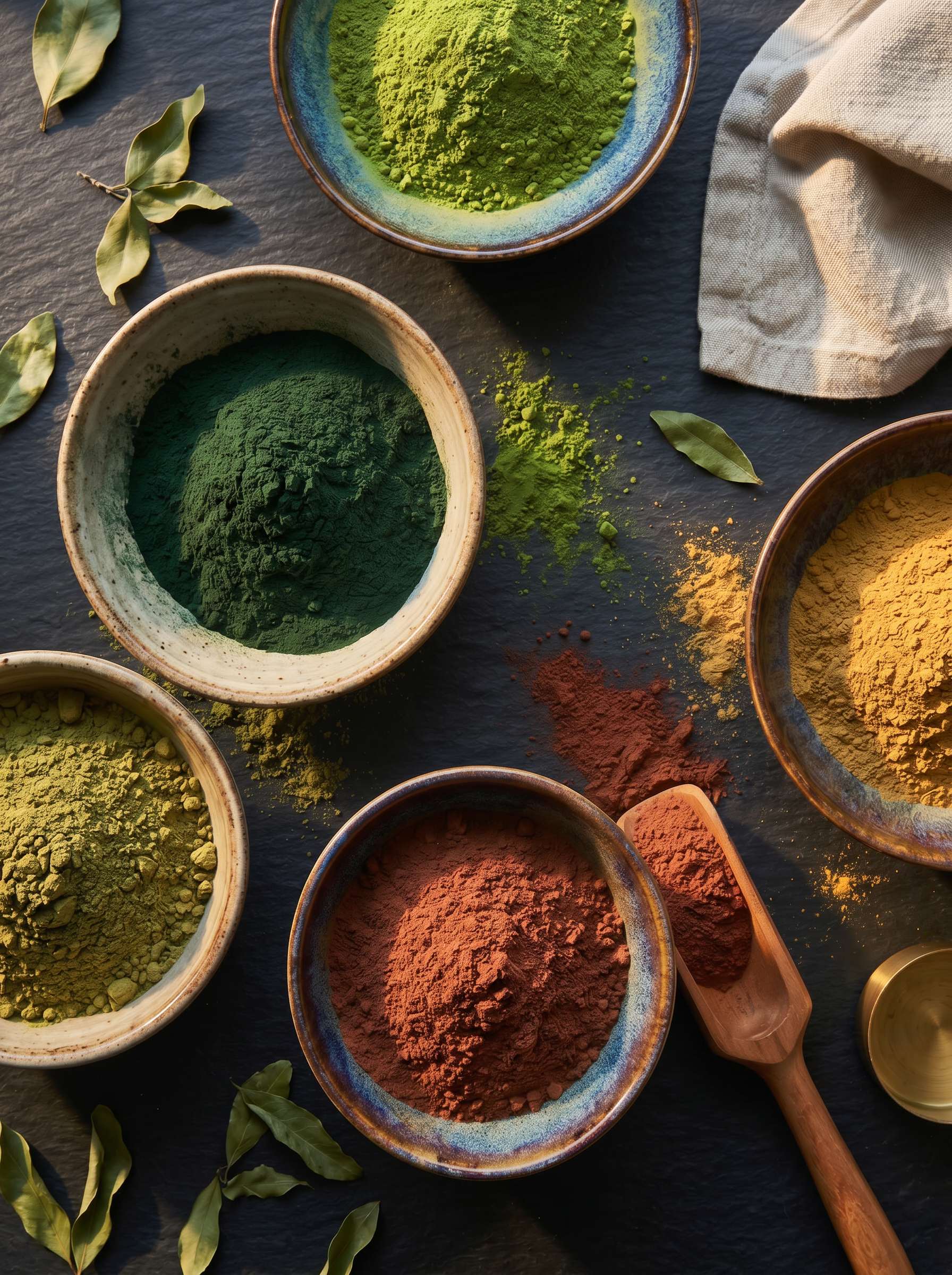
Premium kratom is identifiable. This article is a practical framework for what to look for — the markers of an operation worth buying from.
None of these checks individually proves a vendor is good. Together, they paint a picture. A vendor that hits most of them is operating at the bar you want to be buying from.
Lab testing transparency
This is the single most important signal. The questions to ask:
- Do they publish CoAs at all?
- Are CoAs per-batch, or do they post one CoA and reuse it across the catalogue?
- Is the lab independent and accredited (ISO 17025), not the vendor's in-house testing?
- Can you cross-reference the batch number on the CoA with the batch number on the product you receive?
- Do CoAs include heavy metals AND microbial contaminants AND alkaloid content? Missing any one of these three is a meaningful gap.
For the deeper read on what's in a CoA and how to interpret it, see Lab Testing Explained.
AKA GMP qualification
The American Kratom Association's GMP (Good Manufacturing Practices) qualification programme audits vendors against standards covering testing protocols, facility hygiene, batch traceability, and recall procedures. AKA-qualified vendors are listed publicly on the AKA's website.
It's not a regulatory licence — the AKA is an industry association — but the audit process is real and the standards are non-trivial. A vendor who has gone through AKA GMP qualification is operating with a documented quality management system, which is a different posture from one who hasn't.
If a vendor claims AKA GMP qualification, you can verify it directly on the AKA's site rather than taking the claim on faith.
Sourcing transparency
A vendor who knows where their leaf comes from will say so. Look for specifics:
- Country and ideally region (e.g., "West Kalimantan, Indonesia" rather than "Southeast Asia")
- Whether the vendor works with consistent partner farms or buys spot-market through brokers
- How long they've worked with their suppliers
- Whether harvest practices are described — e.g., shade-drying vs sun-drying, single-origin vs blended
A vendor with named, consistent farm partnerships can ask for specific harvest practices, knows the people who grow what they sell, and learns over time what each farm reliably produces. That depth of relationship is the foundation of consistent quality.
What the website itself tells you
This is more subjective but reliable. A few practical signals:
- Does the site explain things, or just sell things? Quality operations invest in educational content. Its presence signals an operation thinking about the consumer's journey, not just the transaction.
- Restraint in language. Premium operations describe their product accurately and let it speak for itself. Restraint reads as confidence.
- A coherent product line. Clear naming, consistent strain descriptions, and a focused catalogue indicate that the operation has thought carefully about what it sells.
- An explicit scope statement. Operations that are clear about exactly what they sell — whole leaf only, whole leaf and full-spectrum extracts, concentrated 7-OH, or some combination — are making a deliberate, considered position. The clarity is the signal, not the scope itself.
Customer service — the test that matters most
You can read every page on a vendor's website and still not know what happens when something goes wrong. Try this before placing a meaningful order:
- Send a real question. Email or chat with a specific question (e.g., "What's the harvest date on this batch?" or "Do you have CoA results for the heavy metals on Lot ___?"). Note how long they take to respond and how substantive the response is.
- Read their return policy carefully. Is it human-language or wall-of-disclaimer?
- Look for a phone number or live chat with a real human, not just a contact form that disappears into the void.
A vendor who responds to a pre-purchase question quickly and thoughtfully will likely respond the same way if your order ever needs sorting out. The way a supplier handles a small interaction is usually the way they handle a larger one.
Reviews — where to look
Customer reviews are useful when you read them with the right context:
- Independent platforms (Reddit, Trustpilot, Google) carry the broadest range of voices and tend to be the most informative read.
- Look for substance. Reviews that describe specifics — the strain, the batch, the way it arrived, the customer experience around it — are more useful than star counts. Detailed reviews give you a picture; star averages give you a rumour.
- Patterns matter more than any single review. If multiple unrelated reviewers describe the same experience, the pattern is real, in either direction.
- How does the vendor engage? Constructive, named replies — owning what went wrong, explaining what's been changed — say a lot about how the operation handles itself when the work doesn't go to plan.
Markers of a careful operation
Pull these together and you have a working picture of what an operation worth your money looks like:
- Per-batch CoAs from named third-party labs, with batch numbers traceable to the product you receive
- AKA GMP qualified, verifiable on the AKA's site
- Sourcing transparency — named regions, consistent farm partners
- Educational content that informs rather than sells
- Clear, restrained product descriptions — no medical or therapeutic claims (kratom isn't approved for any medical use, and accurate operations don't suggest otherwise)
- Pricing that reflects the real cost of careful sourcing, drying, testing, and shipping
- Responsive, knowledgeable customer service — a real human reachable when something needs sorting out
- Consistent batch labelling and product naming
- An explicit scope statement — exactly what the operation sells (whether that's whole leaf only, whole leaf and full-spectrum extracts, concentrated 7-OH, or some combination), so you know what you’re buying
- A clear, fair returns policy
- Restraint in commerce — the buying flow respects your time and lets you decide unhurried
Putting it together
The fastest evaluation flow if you're new to a vendor:
- Look for the CoA library on their site. Pick a product you'd consider buying. Find its CoA. Confirm batch number, lab name, and that heavy metals + microbial + alkaloid are all tested.
- Check the AKA member directory for GMP qualification.
- Read the About / Sourcing pages for region and farm specifics.
- Send a pre-purchase question and wait.
- If the answer comes back quickly and informatively and the rest checks out, place a small first order to evaluate the actual product.
A small first order is a useful filter. Find out what the bag, the product, and the customer experience are actually like before you commit to a larger purchase.