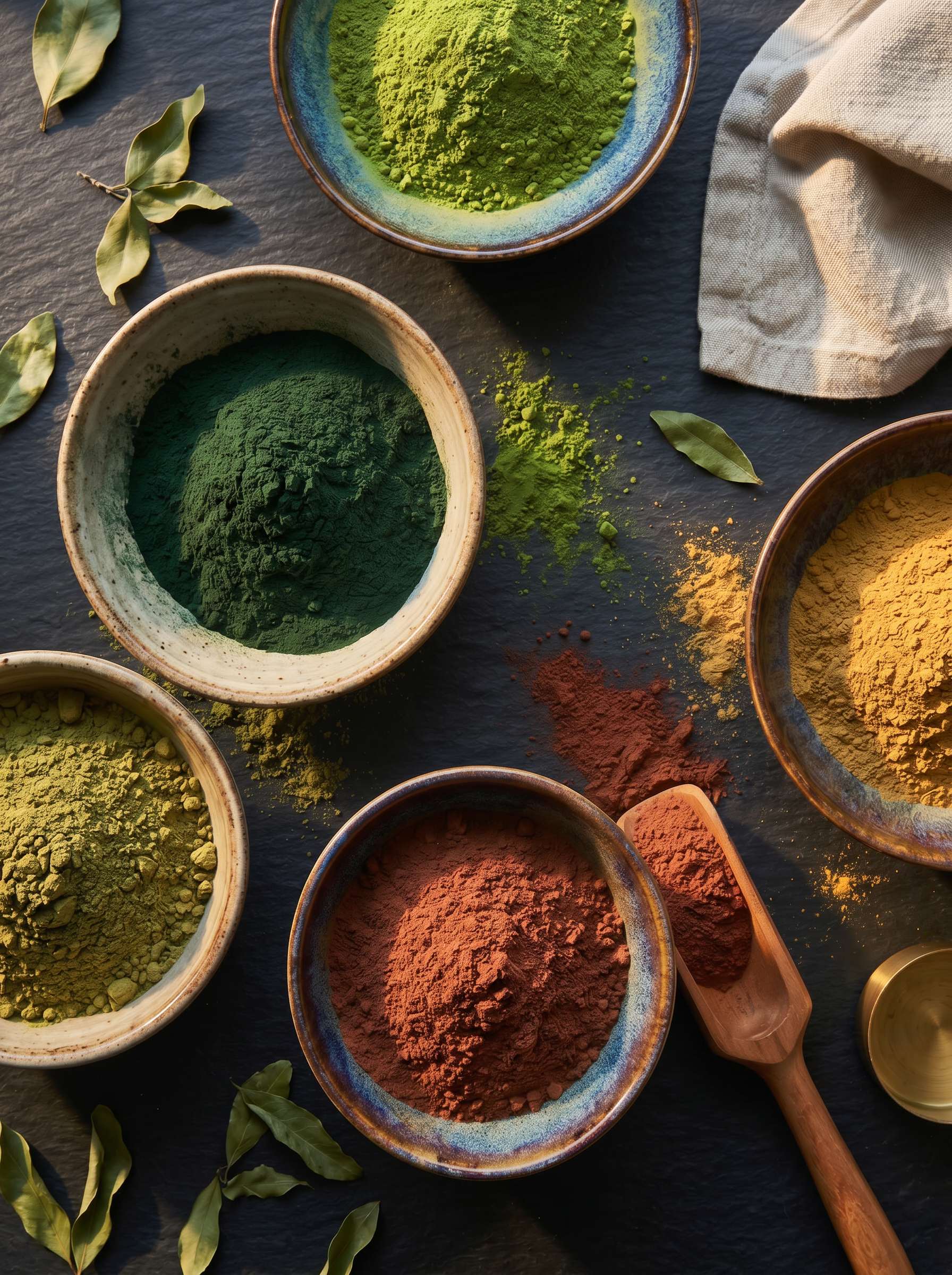
There is no single "correct" kratom serving size. The honest answer to "how much should I take?" is that it depends on you, the strain, the format, your tolerance, and what you're trying to do. This article is about how to think about that, rather than handing you a number that probably isn't right for you anyway.
If you take one thing away: start low, give it time, and let your own response inform the next session. Most problems people run into early are some version of taking too much, too quickly, before they understand what they actually need.
Why dose varies so much between people
Two people of the same body weight, taking the same gram of the same product, can have meaningfully different experiences. The reasons are mundane and well-understood:
- Individual metabolism. The liver enzymes that break down kratom’s active compounds (called alkaloids) work at different rates in different people. Some people clear faster; some slower.
- Tolerance history. If you've used kratom regularly, your response to a given dose is muted compared with someone trying it for the first time.
- What's in your stomach. Kratom on an empty stomach hits faster and feels stronger than kratom on a full meal.
- The product itself. Two batches of the same strain can have somewhat different alkaloid content. A more potent batch at 2 grams might feel like a less potent batch at 3 grams.
So the typical-serving-range numbers in this article are starting points to work from, not prescriptions.
Typical ranges — powder
For loose-leaf powder (the most common format), the broadly accepted range is:
- 1–2 grams — a low serving. Mild, often barely perceptible. Useful as a first-time test of how your body responds.
- 2–4 grams — the most common range for regular users. Where most people land for daily use.
- 4–6 grams — a higher serving. Stronger, longer effects. Not where you start.
- Above 6 grams — not a typical serving. Worth being honest with yourself about why you're considering it.
If you're new, start at 1.5–2 grams on an empty stomach. Wait at least 45 minutes — 60 is better. If nothing's happening after 45 minutes, you can take an additional 0.5–1 gram. Don't immediately re-dose at 15 minutes because nothing seems to be happening; the onset isn't instant.
Capsules
Most kratom capsules contain approximately 500 mg of powder per capsule. That makes the math simple: 4 capsules = ~2 grams, 8 capsules = ~4 grams. Capsules are convenient and let you skip the bitter taste of raw powder, but they cost more per gram and you swallow more total volume.
Important caveat: capsules dissolve in your stomach over time, so onset is slightly slower and a bit smoother than powder mixed in liquid. If you're new and using capsules, the same patience rule applies — wait an hour before deciding whether to take more.
Extracts — a different scale entirely
Extracts are concentrated. Serving sizes are dramatically smaller — typically 0.25–0.5 grams rather than 2–4. If you've been using powder and you switch to an extract without adjusting, you can easily take a serving that is many times stronger than what you intended.
If you've never used an extract, do not start at the upper end of the typical extract range. Use a kitchen scale that measures in fractions of a gram, take 0.2–0.25 grams, and wait. Extracts are not the place to estimate by eye.
Tea
Brewing kratom as a tea (using a coarser cut, steeped 10–15 minutes in hot but not boiling water) extracts a portion of the alkaloids. The remaining solids end up in the strainer. As a result, a 4-gram tea brewed and strained generally feels milder than 4 grams of powder swallowed directly. There's no precise conversion ratio, but plan for tea to be on the gentler end.
Why patience matters more than the number
The single most common early mistake is the "nothing happened" re-dose. You take a serving, fifteen minutes later you feel nothing, you take another serving, twenty minutes after that the original serving and the second serving both arrive at once, and you've now had a much bigger experience than you intended.
Onset for kratom typically begins at 15–40 minutes and peaks somewhere in the 60–120 minute range. If you don't feel anything at 30 minutes, you might at 60. Plan to wait a full hour before adjusting.
How tolerance changes the picture
Like many substances that interact with the same receptor systems, kratom builds tolerance with frequent use. People who use daily often find that their effective serving size creeps up over weeks and months. There are two practical responses:
- Take regular breaks. Some users do "tolerance breaks" — a few days off, sometimes a week — to reset. The effective serving size after a break is typically lower than just before it.
- Rotate strains. Some users rotate between strain types (red, green, white) to slow tolerance build-up to any single profile. The evidence for this is anecdotal but the practice is widespread.
For more on cycling and stepping back when serving sizes have crept up, see Taking breaks: why stepping away keeps your routine better.
Signs to back off
Some experiences are signals that you've taken too much for your current tolerance:
- Strong nausea, especially with sweating
- Dizziness when you stand up
- Wobbly coordination (the colloquial term is "the wobbles" — mild visual instability when looking around)
- Difficulty staying alert
If any of these happen, the next session should be a meaningfully smaller amount. Most often what was intended as a 3-gram serving was, in practice, a more potent batch or eaten on an empty stomach in a way that pushed the effective dose higher than expected.
If you take medications
If you take prescription medication of any kind, your prescriber or pharmacist is the right resource for specific questions — they can check the particular medication against current information faster and more accurately than a general guide can. For the practical side of what to enjoy alongside kratom, see What pairs well — and what doesn’t.